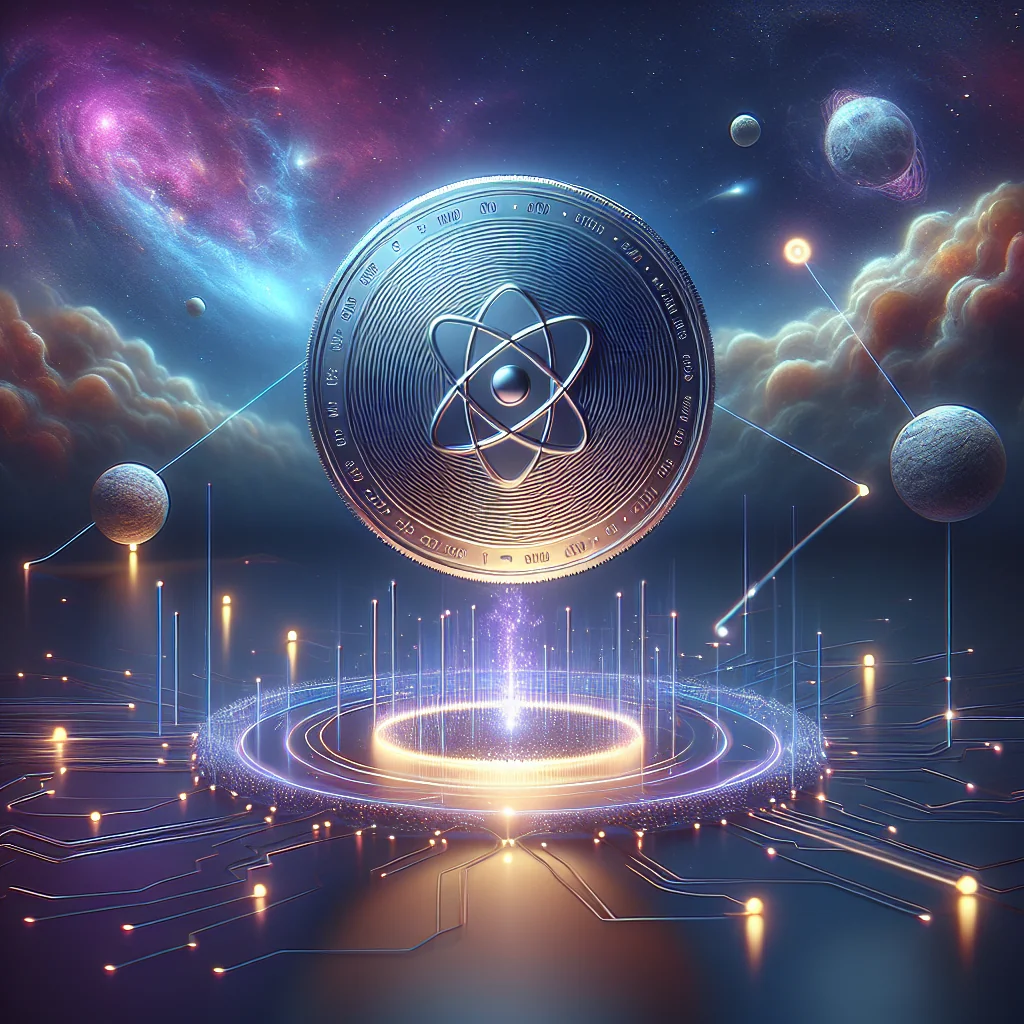
What Is Cosmos? From the Universe to a Modern Crypto Network.

Article Structure
Ask “what is cosmos” and you can get two very different answers. In everyday language, the cosmos means the universe, all space, time, matter, and energy. In technology and finance, Cosmos is also the name of a major blockchain project and cryptocurrency (ATOM). This guide explains both meanings in clear, simple terms.
Understanding the difference saves confusion and helps you read science articles and crypto news with confidence. We will start with the classic meaning of cosmos in science and philosophy, then move to Cosmos the blockchain network, its key ideas, and how to tell the two apart in real use.
Cosmos in science: the universe as an ordered whole
In science, “cosmos” usually means the universe seen as a single, ordered system. The word comes from ancient Greek and contrasts with “chaos.” Cosmos suggests structure, patterns, and laws, not random disorder.
Physical laws that shape the scientific cosmos
Modern physics describes the cosmos with theories such as general relativity and quantum mechanics. These theories explain how space, time, matter, and energy behave on large and small scales. Astronomers study the cosmos using telescopes, satellites, and computer models to test these ideas.
So, in simple terms, the cosmos is everything that exists: galaxies, stars, planets, black holes, gas, dust, radiation, and all forms of matter and energy, including what we cannot yet see directly. The word reminds us that all of this follows consistent physical laws.
How the cosmos is structured: from planets to galaxy clusters
The cosmos is not a random spread of stars. Matter forms structures on many scales, shaped by gravity and motion. Understanding these layers helps you picture where Earth fits in the wider universe.
Nested layers of structure in the cosmos
Scientists often think of the structure of the cosmos in nested levels. Each level is built from smaller parts and is part of something larger. This “layers” view turns an abstract universe into a mental map.
- Planets and moons: Bodies that orbit stars, including Earth and its Moon.
- Star systems: A star and everything bound to it, such as our Solar System.
- Galaxies: Huge groups of stars, gas, dust, and dark matter; our home is the Milky Way.
- Galaxy groups and clusters: Collections of galaxies held together by gravity.
- Superclusters and filaments: Large-scale patterns of matter forming a cosmic web.
- Observable universe: The part of the cosmos we can see, limited by the speed of light.
This layered view shows why many cultures have used the idea of cosmos to express order and connection. Each scale follows physical laws, yet the whole system is vast and still full of unknowns that scientists are trying to understand.
Cosmos in philosophy and culture
Long before modern science, philosophers used the word cosmos to describe the ordered nature of existence. For them, the cosmos was physical space and also a symbol of harmony and balance in life.
Cosmos as a symbol of order and meaning
Ancient Greek thinkers, such as Pythagoras and later Stoic philosophers, saw the cosmos as a living, rational whole. Many traditions linked the order of the cosmos with moral or spiritual order, suggesting that human life should reflect cosmic harmony and balance.
Today, writers and artists still use “cosmos” in a poetic sense. The word often signals a wide view of reality, beyond daily life, and hints at big questions about meaning, origin, and fate. In this sense, cosmos is a bridge between science, art, and personal reflection.
What is Cosmos (ATOM) in crypto and blockchain?
In technology, Cosmos is the name of a blockchain ecosystem and the cryptocurrency ATOM. This Cosmos is very different from the scientific cosmos, but the name reflects a similar idea: many parts forming one connected system.
The core goal of the Cosmos crypto project
Cosmos aims to connect many separate blockchains so they can share data and value. The goal is to avoid a future where each blockchain is isolated, like separate islands that cannot talk to each other. Instead, Cosmos promotes a network of chains that can cooperate.
The Cosmos network is sometimes called the “Internet of Blockchains.” Instead of one chain handling everything, Cosmos supports many chains that can specialize and still interact. This design tries to improve speed, flexibility, and choice for developers and users.
Key ideas behind the Cosmos blockchain network
To understand what Cosmos is in crypto, it helps to know its core design ideas. These ideas shape how the network works and why some developers choose it as a base for their projects.
Main design principles of Cosmos
Here are the main concepts that define Cosmos as a blockchain ecosystem:
- Interoperability: Different blockchains can connect and exchange tokens or data through standard protocols.
- Modularity: Developers can build blockchains using ready-made components instead of starting from scratch.
- Scalability: Many chains can run in parallel, which spreads load and reduces congestion on any single chain.
- Sovereignty: Each blockchain can have its own rules, validators, and governance, while still linking to others.
- Security models: Some chains secure themselves, while others may share security with larger hubs.
These ideas aim to address limits seen in early blockchains, such as slow transactions, high fees, and difficulty connecting different networks. Cosmos is one of several projects that explore this type of multi-chain future, where users move value and data across many chains with less friction.
How Cosmos works: Hub, zones, and IBC
The Cosmos design uses a “hub and zones” model. This model helps many chains connect without each one needing a direct link to every other chain, which would be hard to manage and secure.
Hub, zones, and communication in practice
The Cosmos Hub is a central blockchain in the network. Other blockchains that connect to it are called zones. Zones can be public or private, simple or complex, and can serve many use cases, from finance to gaming to identity.
Communication between hubs and zones uses a protocol called IBC (Inter-Blockchain Communication). IBC defines how chains send verified messages and tokens to each other while keeping their own consensus rules. This lets each zone keep control while still joining a wider network.
The role of ATOM: staking, security, and governance
ATOM is the native token of the Cosmos Hub. The token has several roles in the network, linked to security and decision-making by the community that holds and uses ATOM.
How ATOM supports the Cosmos Hub
Cosmos Hub uses a proof-of-stake system. In this system, people lock (stake) ATOM with validators who run the network. Honest behavior and correct block production are rewarded with new ATOM and fees, while harmful behavior can lead to loss of staked tokens.
ATOM holders can also vote on governance proposals. These proposals can suggest changes to network parameters, upgrades, or new features. Voting gives token holders a direct voice in how the Hub develops over time and how it responds to new needs or risks.
Use cases built on Cosmos technology
Cosmos is not just one chain and one token. The broader ecosystem includes many independent blockchains built with Cosmos tools, often called the Cosmos SDK and Tendermint, or newer versions of these components.
Examples of projects that use Cosmos
Developers use Cosmos technology to build chains for finance, gaming, identity, data, and more. Some chains focus on fast payments, others on privacy, and others on specific apps. Many of these chains use IBC to move tokens or messages between each other, creating a network of linked but separate systems.
This approach lets each chain specialize while still being part of a larger network. The design mirrors the scientific idea of a cosmos made of many connected structures, where local systems keep their identity yet remain part of a shared whole.
Comparing “cosmos” the universe and Cosmos the crypto project
Because the same word describes both the universe and a blockchain network, a direct comparison can help fix the difference in your mind. The table below highlights key contrasts and shared themes.
Key differences and similarities between cosmos (universe) and Cosmos (crypto)
| Aspect | Cosmos (universe) | Cosmos (crypto / ATOM) |
|---|---|---|
| Basic meaning | The entire universe seen as an ordered whole | A network of blockchains linked by shared protocols |
| Field | Physics, astronomy, philosophy, culture | Blockchain technology, computer science, digital finance |
| Main parts | Galaxies, stars, planets, matter, energy | Cosmos Hub, zones, validators, ATOM token, IBC |
| Type of order | Physical laws such as gravity and quantum rules | Code, protocols, consensus rules, and governance |
| Human role | Observer and explorer of natural reality | Designer, builder, and user of digital networks |
| Shared idea | Many parts form one connected universe | Many chains form one connected ecosystem |
The table shows that while the subjects are very different, the shared theme of order and connection explains why both use the word cosmos. The universe and the crypto project each present a network of linked parts that form a larger system.
How to tell which “cosmos” someone means
Because “cosmos” has both a scientific and a crypto meaning, context is important. You can often tell which one is meant by the words around it, the type of source, and the questions being asked.
Simple steps to identify the right meaning
Use this short, ordered checklist when you meet the word “cosmos” in text or speech. The steps help you decide which meaning fits best.
- Look for nearby terms like galaxy, star, universe, or telescope. If they appear, the topic is likely the scientific cosmos.
- Check for words such as harmony, order, nature, or existence. These often point to a philosophical or cultural sense of cosmos.
- Scan for crypto terms like blockchain, ATOM, staking, validator, or IBC. If you see them, the subject is almost surely Cosmos the crypto project.
- Consider the source: a science journal, astronomy blog, or physics textbook usually means the universe; a tech or crypto site usually means the blockchain network.
- Ask what kind of question is being answered: “How old is the cosmos?” suggests the universe; “How do I stake in Cosmos?” points to the crypto network.
Once you practice these steps, you will read and hear the word “cosmos” with less confusion. The same spelling hides very different topics, but context and a quick checklist make the intended meaning clear.
Why “what is cosmos” is a bigger question than it seems
As a scientific term, cosmos invites you to think about the universe as a structured whole. As a crypto project, Cosmos offers a vision of many blockchains connected into a shared network. Both uses of the word highlight connection, order, and interaction across many parts.
Bringing the two meanings together
When you ask “what is cosmos,” you are touching on deep questions: How is reality structured? How do separate systems link and cooperate? Whether you look up at the night sky or study digital networks, the idea of cosmos helps frame those questions in a clear way.
If you keep the two meanings in mind—cosmos as universe and Cosmos as blockchain—you can explore each subject more clearly. You also gain a useful mental link between science, philosophy, and modern technology, all tied together by a single, powerful word: cosmos.