
What Is Atom? A Clear Guide to the Building Blocks of Matter.
Article Structure
If you are asking “what is atom,” you are really asking about the basic building block of everything around you. Atoms make up your body, the air, water, and every solid object you see. Understanding atoms gives a simple way to see how matter is built and how it behaves in daily life and in science.
What Is an Atom in Simple Terms?
An atom is the smallest unit of a chemical element that still has that element’s properties. If you break an atom into smaller parts, those parts no longer behave like that element. This simple idea is the starting point for chemistry and physics.
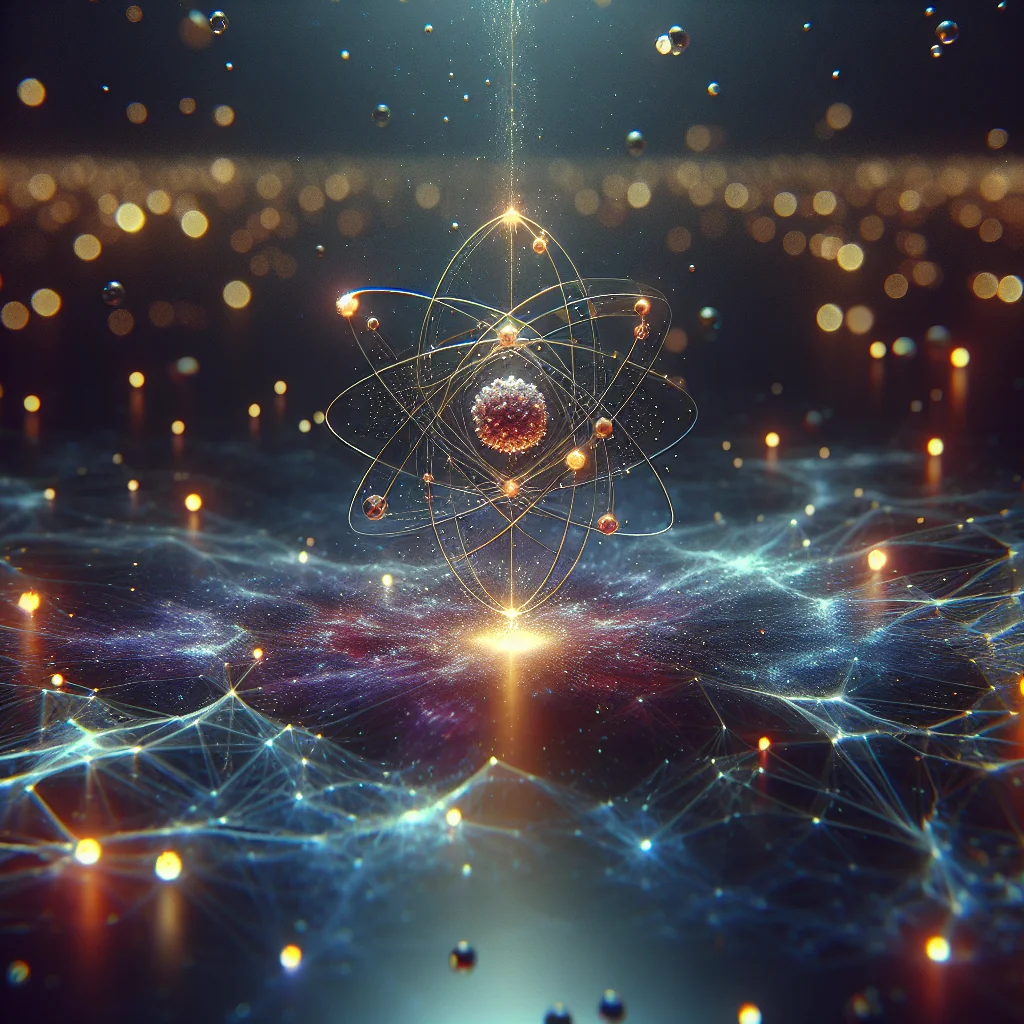
Every atom has a tiny, dense center called the nucleus and a cloud of even smaller particles around it. The way these parts are arranged explains why different substances act differently and why some are stable while others react quickly.
Atoms as the Basic Units of Matter
Atoms are incredibly small. You cannot see a single atom with your eyes or a normal microscope. Scientists use special tools and models to study them and to predict how they behave in groups. Even though atoms are tiny, combining huge numbers of them creates every object you can touch or see.
Key Parts of an Atom and What They Do
To answer “what is atom” fully, you need to know its main parts. Each type of particle inside an atom has its own role and electric charge, and these roles explain most basic behavior of matter.
- Protons – Positively charged particles in the nucleus. The number of protons defines the element.
- Neutrons – Neutral particles in the nucleus. Neutrons add mass and help hold the nucleus together.
- Electrons – Negatively charged particles that move around the nucleus. Electrons control how atoms bond and react.
These three particles work together. Protons and neutrons give the atom most of its mass, while electrons decide how atoms connect to form molecules and larger structures. Changing the number of protons creates a new element, while changing electrons or neutrons changes how that atom behaves or how stable it is.
Comparing Atomic Particles at a Glance
The table below gives a simple overview of the three main particles in an atom and how they differ.
| Particle | Location in Atom | Electric Charge | Main Role |
|---|---|---|---|
| Proton | Nucleus | Positive | Defines the element and adds mass |
| Neutron | Nucleus | Neutral | Adds mass and affects stability |
| Electron | Electron cloud around nucleus | Negative | Controls bonding and chemical reactions |
Seeing the particles side by side shows why each one matters. Protons and neutrons sit tightly packed in the nucleus, while electrons move in a wide region around them. The balance between their charges keeps the atom held together.
Inside the Nucleus: Protons, Neutrons, and Atomic Number
The nucleus sits at the center of the atom and holds protons and neutrons tightly packed together. Even though the nucleus is tiny compared to the whole atom, it contains almost all the atom’s mass and strongly affects its stability.
The number of protons in the nucleus is called the atomic number. This number defines the element. For example, any atom with 1 proton is hydrogen, and any atom with 8 protons is oxygen. Changing the atomic number always means changing the element itself.
Isotopes and Atomic Mass
Neutrons do not change the element, but they change the atom’s mass. Atoms of the same element that have different numbers of neutrons are called isotopes. Isotopes behave almost the same in chemistry, but they can differ in stability and use, such as in medical imaging or in tracing chemical paths in research.
The Electron Cloud: Where Chemical Reactions Begin
Electrons are much lighter than protons and neutrons and move around the nucleus in a region often called the electron cloud. You can think of this cloud as zones where electrons are likely to be, rather than fixed paths like orbits in a simple drawing.
Electrons are arranged in energy levels or shells. Atoms tend to be more stable when their outermost shell is full. This need for a full outer shell explains why atoms gain, lose, or share electrons in reactions and why some atoms are very reactive while others are calm.
Valence Electrons and Reactivity
The electrons in the outer shell, called valence electrons, are the ones that take part in chemical bonding. The number and arrangement of these valence electrons explain why sodium reacts strongly with water while helium stays unreactive. Atoms with nearly full or nearly empty outer shells tend to react more easily.
How Atoms Join: Bonds and Molecules
Single atoms rarely stay alone. Most matter you see is made of atoms joined together by chemical bonds. These bonds form when atoms share or transfer electrons to reach more stable electron arrangements.
The main types of chemical bonds are easy to describe with simple examples. Each type depends on what the atoms want to do with their valence electrons and how strongly they attract electrons.
Three Common Types of Chemical Bonds
You can follow these basic steps to see how different bonds form between atoms.
- In an ionic bond, one atom loses electrons and another gains them, forming charged ions that attract each other.
- In a covalent bond, atoms share one or more pairs of electrons, forming stable molecules like water or oxygen gas.
- In a metallic bond, metal atoms share a “sea” of electrons that move freely, which helps metals conduct heat and electricity.
When atoms bond, they form molecules or ionic compounds. A water molecule, for example, has two hydrogen atoms bonded to one oxygen atom. The way atoms bond controls the shape, strength, melting point, and other traits of substances you use every day.
What Is Atom in the Periodic Table?
The periodic table is a chart that arranges elements by their atomic number and by patterns in their electron structure. Each box in the table stands for one type of atom and shows its symbol and atomic number.
Atoms in the same column, called a group, have similar valence electron patterns. This is why they often behave in similar ways. For example, all noble gases in one group are very unreactive, while alkali metals in another group are highly reactive.
Periods, Groups, and Atomic Trends
Atoms in the same row, called a period, share the same number of electron shells. Moving across a period, the number of protons and electrons increases, and properties change in a regular way. These trends help students and scientists guess how an unknown element might behave based on its place in the table.
Why Atoms Matter in Everyday Life
Atoms may seem abstract, but they explain many familiar things. From the way salt dissolves in water to how batteries work, atom behavior is behind it all. Even taste, smell, and color come from how atoms and molecules are arranged and how they interact with light.
In medicine, knowledge of atoms and isotopes supports imaging and some treatments. In technology, understanding atoms helps build semiconductors, LEDs, and many modern devices, including phones and computers.
Real-World Examples of Atomic Effects
Simple ideas like why ice floats, why metal conducts electricity, or why some materials are hard and others soft are tied to how atoms are arranged and how they share electrons. Changing the atomic structure of a material can lead to stronger alloys, brighter screens, or better batteries.
Modern View: Atoms Are Not Truly Solid Balls
Early models showed atoms as tiny solid spheres or as a “solar system” with electrons orbiting like planets. These images are helpful for beginners, but modern physics gives a more accurate view and uses more advanced math to describe atoms.
Today, scientists use quantum theory to describe atoms. In this view, electrons act like both particles and waves. We talk about probabilities of where an electron might be, not exact paths, and use shapes called orbitals to show likely regions.
Why Simple Models Still Help Learners
Even with this advanced view, the basic idea stays the same for most learning: an atom has a nucleus with protons and neutrons and a surrounding electron cloud that controls chemical behavior. Simple ball-and-stick or shell models give a good first picture before moving on to deeper quantum ideas.
Common Questions People Have About Atoms
Many people share the same first questions about atoms. Simple, clear answers help fix the main ideas in your mind and make later lessons easier to follow.
One common question is whether atoms are the smallest things that exist. Atoms are very small, but protons and neutrons are made of even smaller particles called quarks. Electrons, as far as current science knows, are among the smallest basic particles that cannot be broken into smaller parts.
Do Atoms Ever Touch or Stop Moving?
Another question is whether atoms ever touch. Atoms in solids sit close together, but the electron clouds keep their centers apart. What you feel as “touch” is really the repulsion between electron clouds, not nuclei bumping together. Atoms also never fully stop moving unless they reach a temperature close to absolute zero.
Bringing It Together: What Is Atom in One Clear Picture
An atom is the basic unit of an element, made of a central nucleus with protons and neutrons and a surrounding cloud of electrons. The number of protons tells you which element the atom is. The number and arrangement of electrons tell you how the atom reacts and bonds with other atoms.
Once you understand these key ideas, chemistry, physics, and many real-world technologies start to make more sense. Every object, from a grain of sand to a star, is built from atoms linked in different ways. Knowing what an atom is gives you a clear, simple base for learning more about matter and how the universe is built.